per blocked gutter per typhoon season
"Your building processed 47,000 litres last wet season. Where did it go?"
Three questions every Hong Kong
property owner is asking.
"In 2023, water ingress complaints to the Buildings Department rose 34% in the weeks following Typhoon Saola — the majority traced to blocked rooftop drainage."
How often should gutters be cleaned in a subtropical climate?
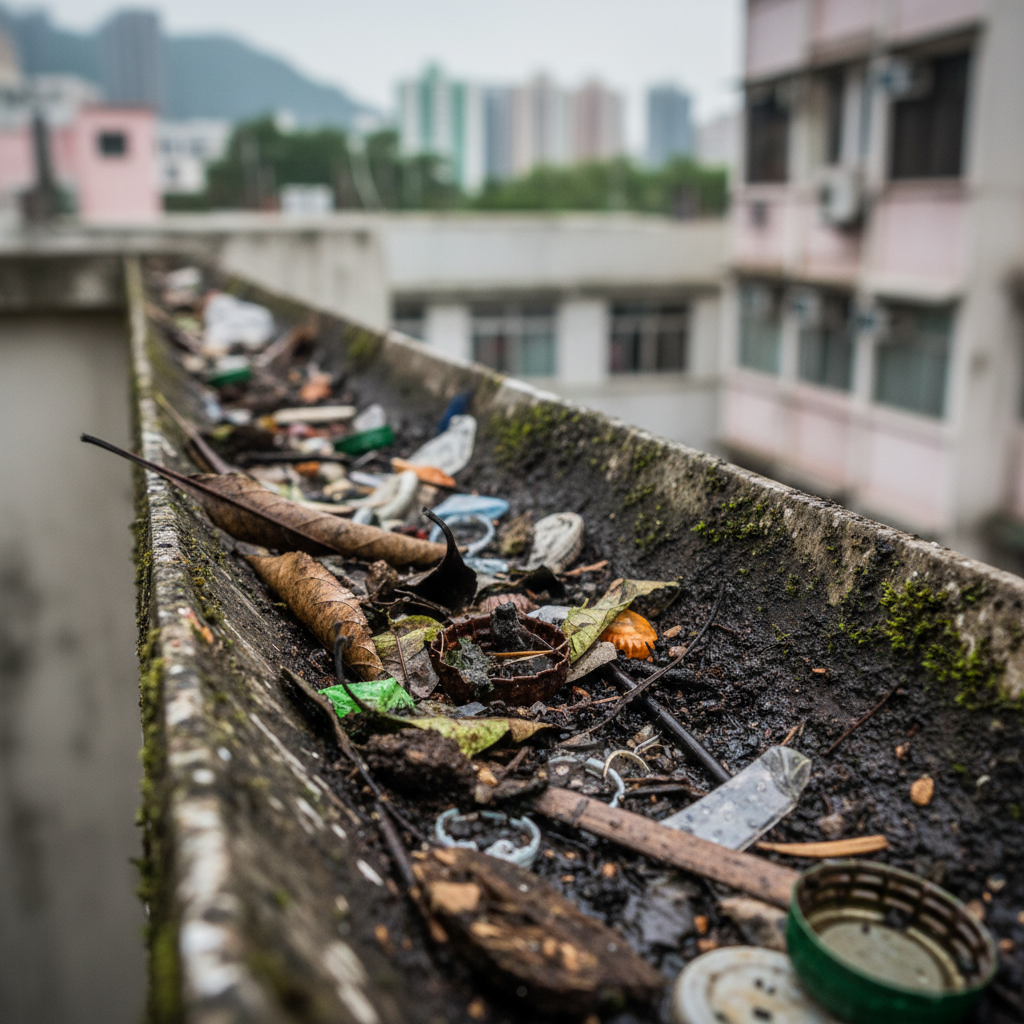
Hong Kong receives an average of 2,431mm of rainfall annually — roughly three times London's total. That volume carries leaf litter, banyan seed pods, typhoon-deposited debris, and fine silt into every horizontal surface on your rooftop. The Observatory records the bulk of this rain between May and September, which means gutters that were clear after the last dry season can be completely packed by June. For most residential buildings, that means a minimum of two cleans per year: one in late March before the wet season begins, and one in November once the typhoons have passed. Buildings with mature trees overhead — common in Mid-Levels, Sai Kung, and Clearwater Bay — often need a third clean in July when seed pods drop heaviest. Village houses in the New Territories face a different problem: wide, shallow gutters that collect standing water and mosquito larvae between rains. A quarterly schedule is standard there.
Is my management company liable for water ingress from blocked gutters?
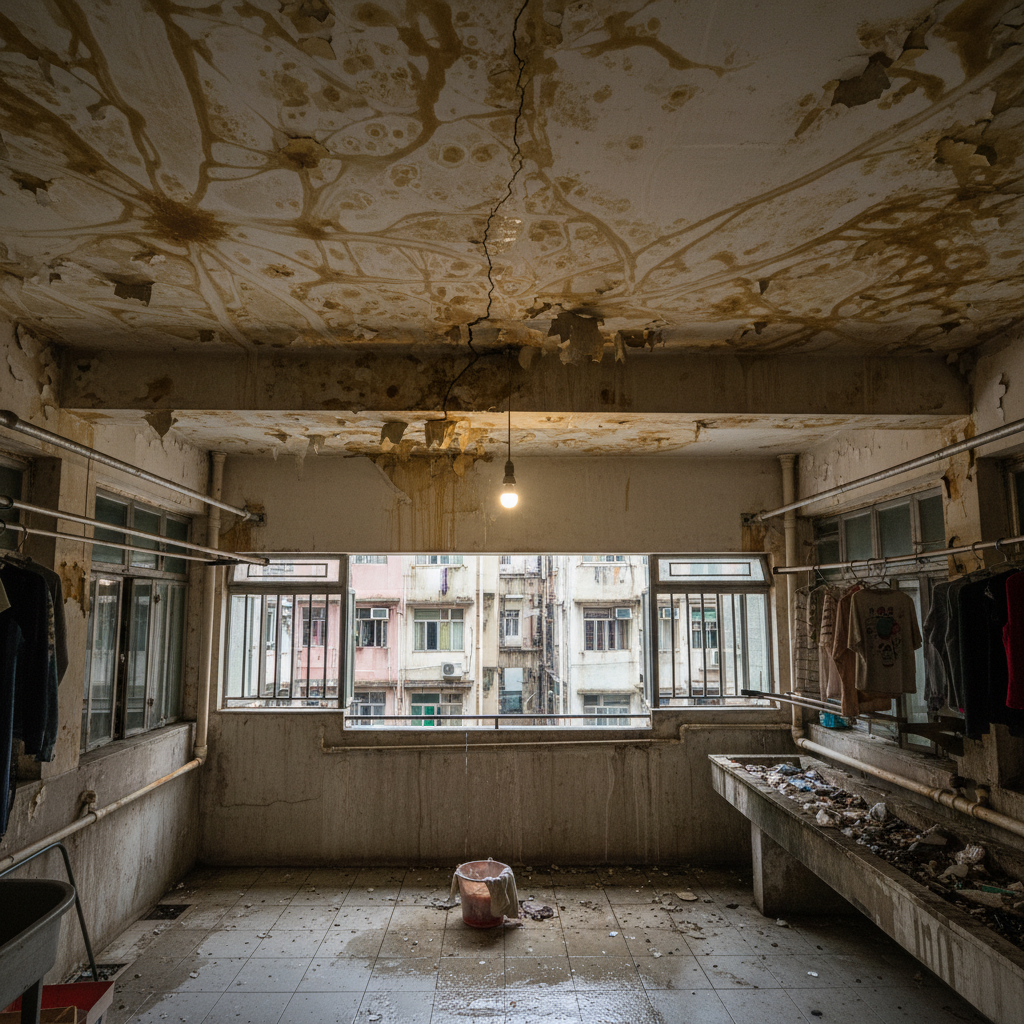
Under Hong Kong's Building Management Ordinance (Cap. 344), the obligation to maintain common parts of a building — including rooftop drainage channels and external downpipes — falls on the owners' corporation or, where one does not exist, the property manager. If a blocked gutter causes water to penetrate into a private flat and the management company cannot demonstrate that reasonable maintenance was performed, they face exposure under both the Ordinance and common law negligence. In practice, insurers are increasingly demanding documented maintenance records before honouring water ingress claims. A single cleaning receipt is rarely sufficient; courts and insurers want to see a scheduled programme with dated reports. This is why property management offices across Kowloon and Hong Kong Island are moving from reactive repairs to pre-season inspection contracts — the documentation becomes a shield as much as the service itself.
What happens during typhoon season if downpipes are blocked?
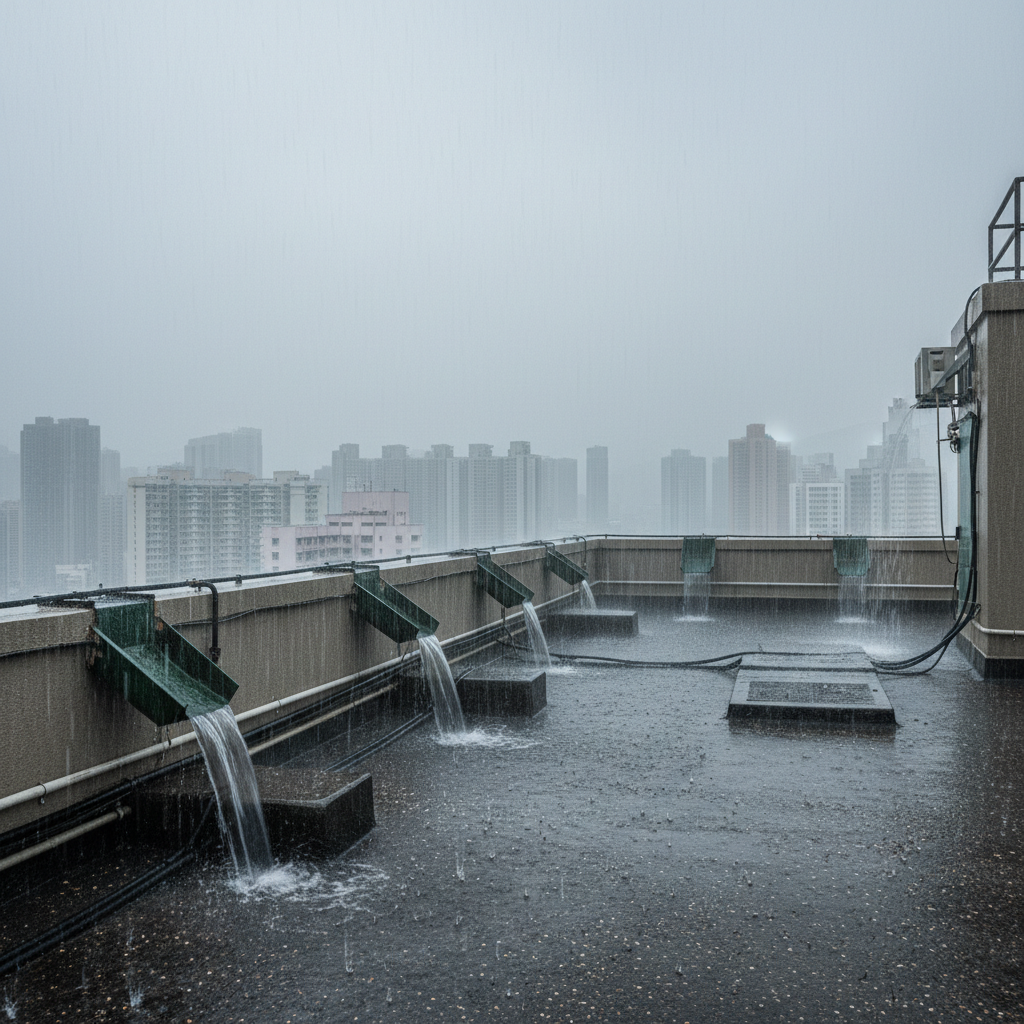
A Signal 8 typhoon delivers rainfall at rates exceeding 100mm per hour. A standard 150mm downpipe, when clear, can handle approximately 4.5 litres per second. When that same pipe is 60% obstructed by compacted silt and root matter — a condition we find in roughly one in three buildings we inspect — its capacity drops to under 1.5 litres per second. The overflow doesn't wait for the typhoon to pass. It backs up along the roof parapet, finds the lowest point — which is usually a maintenance hatch, a rooftop plant room door, or an ageing sealant joint — and enters the building structure. By the time the signal is lowered and the damage is visible on an interior ceiling, water has already been sitting inside the wall cavity for six to twelve hours. Structural drying, mould remediation, and plaster replacement in a single flat typically runs HK$45,000–85,000. The gutter clean that would have prevented it: HK$1,800.
Clear the channels.
Before the rain decides for you.
A 45-minute roof inspection covers every drainage point, downpipe outlet, and parapet channel. Written report included.